It’s August 2025, and Iceland’s summer is at its brightest. After a long, luxurious soak in the milky‑blue waters of the Blue Lagoon and a wander through the steaming lava fields near Grindavík, we continue our journey along the island’s southern coast.
Our destination is Vestmannaeyjar—the Westman Islands—an enchanting archipelago just off Iceland’s shore. We’ve come for one reason: to meet the puffins, those charming seabirds with bright orange beaks and curious expressions. Vestmannaeyjar is home to the largest puffin colony in Europe, and from April through August, the islands become a bustling haven for these remarkable birds.
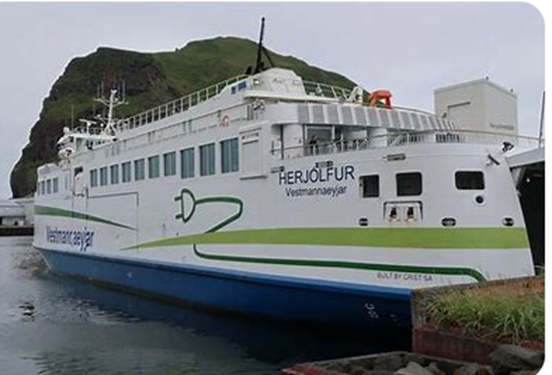
The easiest way to reach the islands is by boat. To get to Vestmannaeyjar, travelers take the Herjólfur ferry from Landeyjahöfn—a quick 35–40 minute ride across the water. The ferry docks at Heimaey, the largest island in the Vestmannaeyjar archipelago.
We packed nothing more than pajamas and toothbrushes and left our car overnight in the parking lot by the mainland ferry terminal. The crew couldn’t have been more welcoming. On board, you’ll find a snack bar and even a stash of cozy coats perfect for curling up and taking a nap. Yes, you really can snooze your way to the islands.
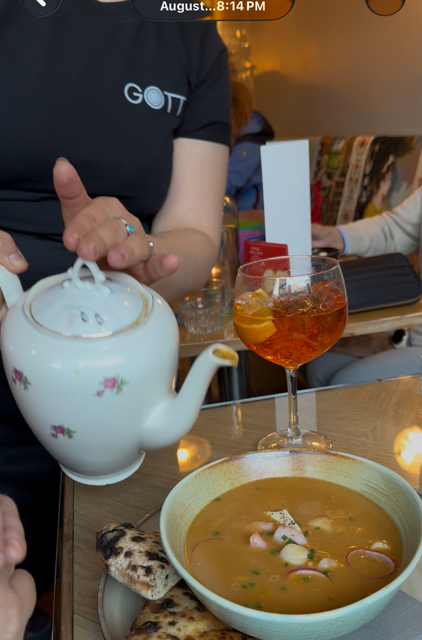
Upon arriving, we headed straight to Gott Restaurant for dinner. We chose dishes from the Icelandic menu—creamy seafood soup, the fish of the day (wolf fish served with vegetables and potatoes in a rich, savory sauce that tasted delightfully close to béarnaise), and a slice of cake to finish.
The restaurant itself felt whimsical and a little magical, as if it belonged in a fairytale perched at the edge of the world.

…It looks like Barbie and Ken had a holiday reception at Gott. We found their picture in the ladies’ bathrooms.
After dinner, we set out for a hike across—and even on top of—the lava fields formed during the 1973 eruption, picking up a few geocaches along the way. From January 23 to June 28 of that year, the island’s volcano spewed slag and lava for nearly five months. Although only one life was lost, almost 300 homes were destroyed and another 70 were blasted by scorching tephra. Virtually the entire population had to be evacuated. It wasn’t until July that residents were finally able to return and begin the long, difficult task of rebuilding their lives. Walking over ground that now hides entire buildings beneath layers of ash was an eerie, unforgettable experience.
For the night, we settled into our family room at Lava Guesthouse, conveniently just steps from the restaurant. The guesthouse offers comfortable family rooms with private bathrooms and is both charming and very reasonably priced. Its walls are lined with old photographs of homes and businesses now buried under volcanic debris—a quiet tribute to the island’s past. You can take a look at lavaguesthouse.com..
At last, the day arrived to meet those tiny wonders of nature—but not before stopping at Vigtin Bakhus café for coffee and freshly baked Icelandic pastries. Then it was finally time to go in search of puffins…with the help of seasoned puffin guides, of course.
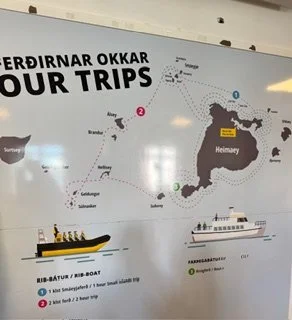
What is a better way to explore the island but by a speedy RIB boat?!! What better way to explore the island than by hopping aboard a speedy RIB boat? The experience strikes the perfect balance between adrenaline and breathtaking scenery. RIBSAFARI offers exhilarating tours around the Westman Islands, with options for one‑ or two‑hour trips. Along the way, you can watch puffins in their natural habitat, spot other wildlife, glide past dramatic landscapes, slip into sea caves, and enjoy a lively guided tour—all while skimming across the waves.
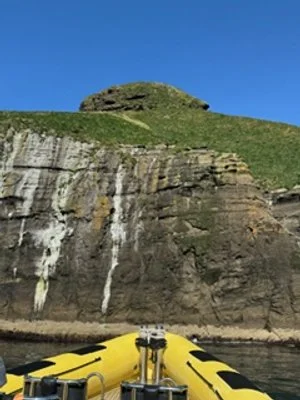
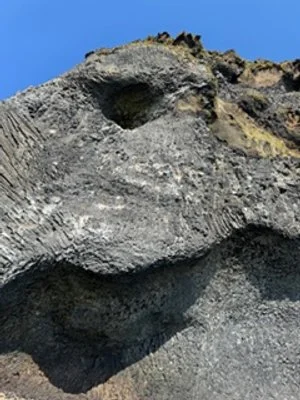
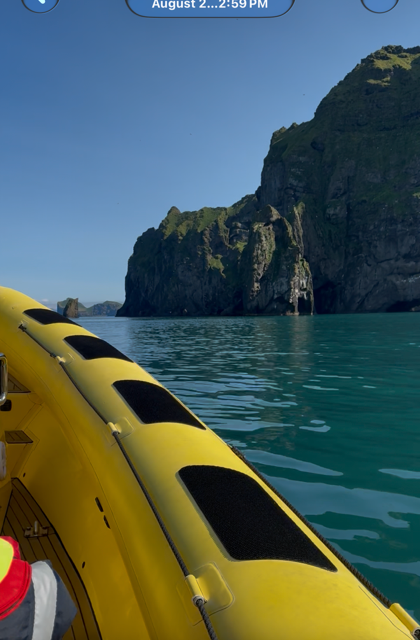
We rode the waves, explored and enjoyed the raw beauty of Iceland's coastal nature…
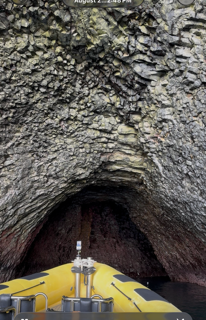
We listened to soul-clenching songs in hidden sea caves…
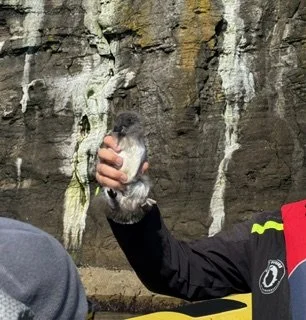
Our guide, Albert, regaled us with tales of Turkish pirates and the island’s “puffling parade.”
Baby puffins—called pufflings—hatch in a snug burrow carefully dug by their parents. Puffins mate for life and raise just one chick each year. After a few months, in a tough‑love lesson meant to push their young toward independence, the parents stop feeding them. This encourages the pufflings to leave the nest and head out to sea, where they drift and learn to survive for several years before returning as adults.
For most, this rite of passage unfolds exactly as nature intended. But some become confused by the glow of the town’s lights or are blown off course by a sudden gust of wind. Instead of flying toward the open ocean, they make a dramatic wrong turn and end up in the middle of town.
That’s when the residents of Heimaey step in. Each year, locals gather the lost pufflings, gently scoop them up, and release them back into the ocean—giving the little wanderers a second chance at the journey they were meant to take…
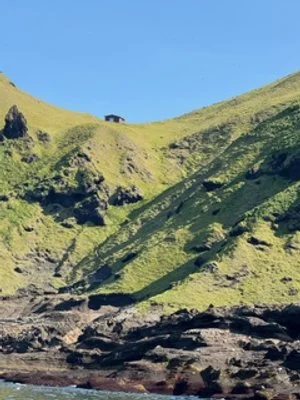
We saw the world’s loneliest house…see Ryan Trahan's journey to the world's loneliest house on his Youtube channel…
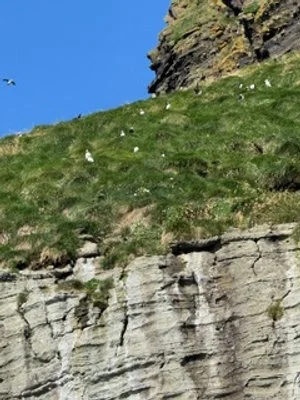
We watched the island’s largest puffin colony gathered beside their nests. Puffins build these nests in underground burrows, which they dig into the soft soil of grassy slopes or cliff tops. Each burrow stretches about 2 to 3 feet deep and often includes a gentle bend to shield the nest from predators and harsh weather. Similar nesting sites can be found in places like Wales and Scotland, where the landscape offers the perfect conditions for puffins to dig their burrows and raise their young.
This unforgettable land of raw and powerful beauty…the holy land of puffins.
Copyright by YBG Travel Adventures. For references or help with planning your own adventure, please reach out through “Contact” feature.